
With the Triangle constantly making “top” lists for families, activities for toddlers are absolutely necessary.…

When parents research STEM vs STEAM learning, they are often trying to understand how early education can best support curiosity, problem solving, and long-term success. At first glance, STEM vs STEAM education may appear nearly identical, but there are meaningful differences that influence how children explore, create, and learn—especially at an early age.
At Primary Beginnings, we thoughtfully incorporate STEM and STEAM learning experiences into our 5-star Raleigh preschool programs. These approaches support a child’s education by blending academics, exploration, and developmentally appropriate play-based learning.
Table of Contents
What Does STEM Mean in Early Education?
STEM stands for science, technology, engineering, and mathematics. The term STEM was popularized with support from the National Science Foundation to describe an integrated educational focus on these essential fields. Today, STEM education emphasizes learning through exploration, experimentation, and logical reasoning.
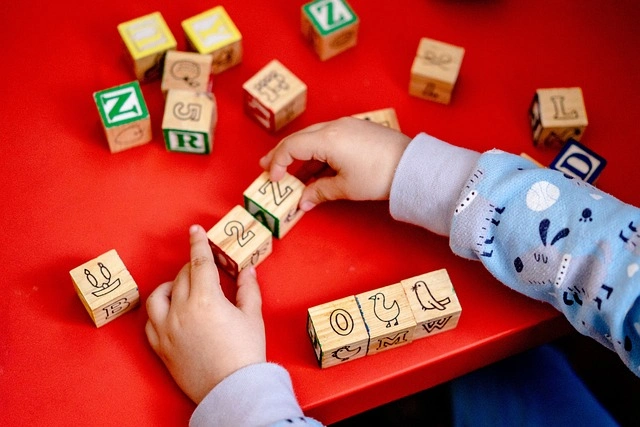
In early childhood settings, STEM does not mean formal lectures or advanced equations. Instead, it introduces basic scientific concepts, simple mathematical concepts, and early engineering ideas through age-appropriate hands on activities.
What Is STEAM Education for Preschoolers?
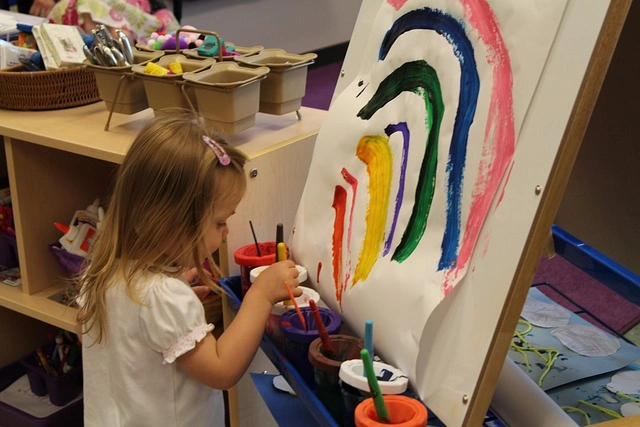
STEAM stands for science, technology, engineering, arts, and mathematics. STEAM education builds upon STEM by integrating the creative language arts disciplines of visual arts, music, graphic design, writing, and other forms of expression.
Rather than separating academic and creative learning, STEAM takes a holistic approach to developing skills, showing children how multiple disciplines work together in real-world applications.
The Differences of a STEM vs STEAM Curriculum
Understanding the differences between a STEM vs STEAM curriculum helps parents make informed decisions about their child’s education. While both approaches support academic growth, curiosity, and foundational learning, they differ in:
- How subjects are taught
- How creativity is incorporated
- How children engage with content across disciplines
Key Differences in a STEM Curriculum
- Focuses on science, technology, engineering, and math as core learning areas
- Emphasizes logic, structure, and measurable outcomes
- Encourages early critical thinking skills and problem solving skills through experimentation
- Introduces scientific concepts and mathematical concepts using predictable processes
- Supports technical reasoning often used in fields such as engineering and technology
- Centers learning around objective answers and testing ideas through observation
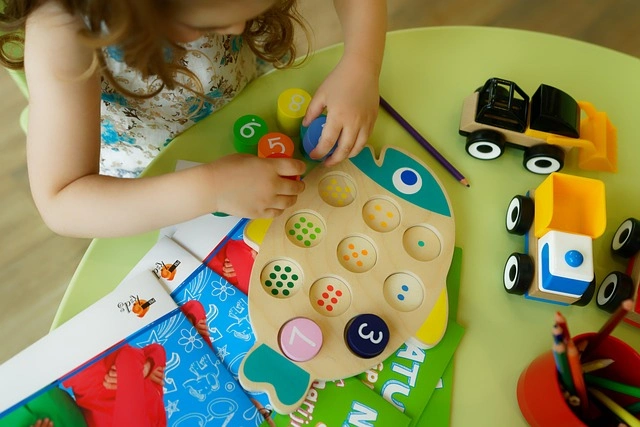
A STEM curriculum helps prepare students to understand how systems work and how ideas can be tested and refined.
Key Differences in a STEAM Curriculum

- Expands STEM by integrating arts, including visual arts, music, and creative design
- Encourages creativity, imagination, and expressive learning
- Supports soft skills such as collaboration, communication, and flexibility
- Allows children to explore concepts while forming their own opinions
- Uses open-ended projects and project based learning
- Promotes a holistic approach by connecting academic subjects with creative expression
A STEAM curriculum reflects how learning and innovation occur in the real world, where creative thinking and technical knowledge work together.
How STEM and STEAM Overlap
- Both approaches are grounded in education and meaningful learning experiences
- Each supports science, engineering, math, and technology development
- Both encourage exploration, curiosity, and real-world problem solving
- STEM and STEAM are designed to support long-term learning and future success
Rather than choosing one over the other, many preschool programs recognize the value of blending STEM and STEAM to support well-rounded development.
STEM Activities for Toddlers
STEM learning for toddlers focuses on exploration, discovery, and understanding how the world works through play.
STEAM Activities for Toddlers
STEAM activities for toddlers build on STEM by intentionally incorporating arts, creativity, and expression.
Explore Cross Curricular Early Learning Programs In Raleigh
At Primary Beginnings, our teachers introduce children to all areas of learning, including STEM and STEAM lessons that encourage critical thinking, problem solving, and creative expression. To learn more about preschool program in North Raleigh, fill out the form below or call our Spring Forest Road location at 919-790-6888, Falls of Neuse Road location at 919-615-0752, or North Hills Drive location at 919-785-0303.