
Considering a preschool program for your child in Raleigh? At Primary Beginnings we have everything…
Potty training is one of the most intimidating milestones of the toddler years, especially when a daycare or new classroom is waiting on the other side of it. It doesn't have to be a battle. With the right timing and a real partnership with your child's teachers, most families get through toilet training with a lot of extra laundry and not much more drama.
Primary Beginnings has three 5-star rated child care centers in Raleigh, and our toddler classroom teachers help parents work through this transition phase. Daily updates keep you in the loop about your child's day, so home and school can move in step.
This guide covers how to potty train with daycare in mind. Three things matter most: recognizing true readiness, dressing for success and keeping the same routine at home and at school.
Table of Contents
How to Potty Train: The Short Version
Wait until your child shows readiness signs, set up a potty chair or toilet seat, and build a routine of potty sits after waking, after meals and before nap. Dress your child in easy-to-pull pants, praise effort, stay calm about accidents and use the same approach at home and daycare. Most children are ready between 18 and 24 months, and potty training can take 3 to 6 months to complete.
What Age Should You Potty Train a Child?
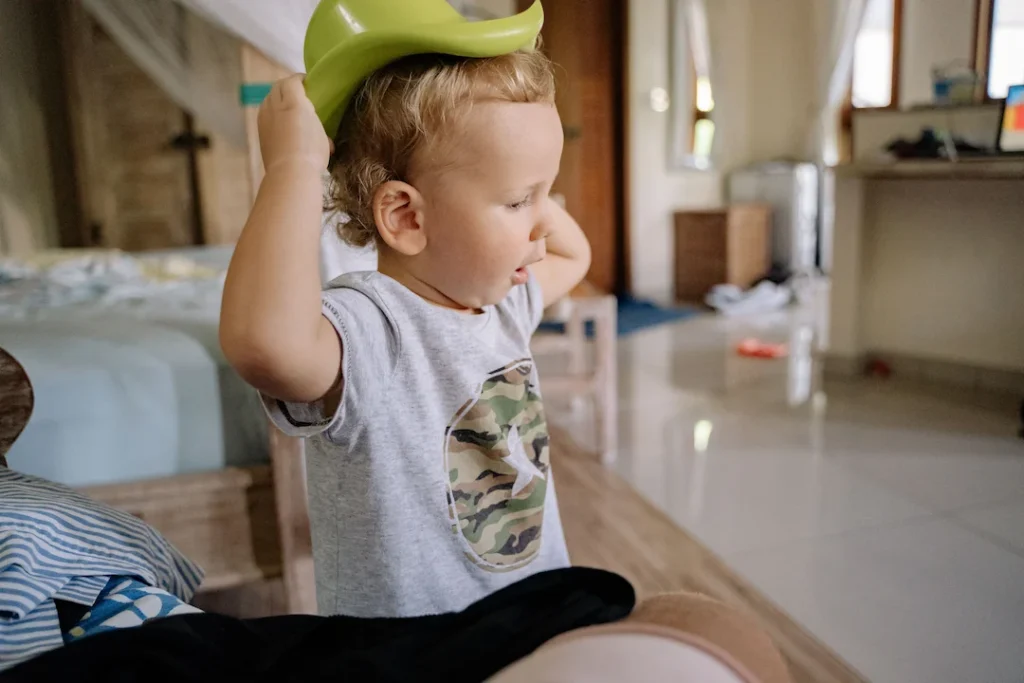
Most children are ready between 18 and 24 months, and some show signs even earlier. Children can't control their bladder muscles until about 18 months, so starting sooner usually means more cleanup than progress.
Age is only a rough guide, though. Starting potty training when your child is developmentally ready works better than following a deadline, and pushing too early often leads to frustration and setbacks at school.
Children usually gain daytime bladder control between ages 2 and 5, and most stay dry at night between ages 5 and 7. Boys often start a little later than girls. If your 2-year-old isn't ready yet, that is well within the normal range.
Is Your Child Ready for Potty Training? Three Core Signs
Look for a cluster of signs rather than a single one. When your child shows signs in all three areas, you are ready for potty training. If not, wait a few weeks and look again. Waiting costs very little.
Gear and Prep Before You Start
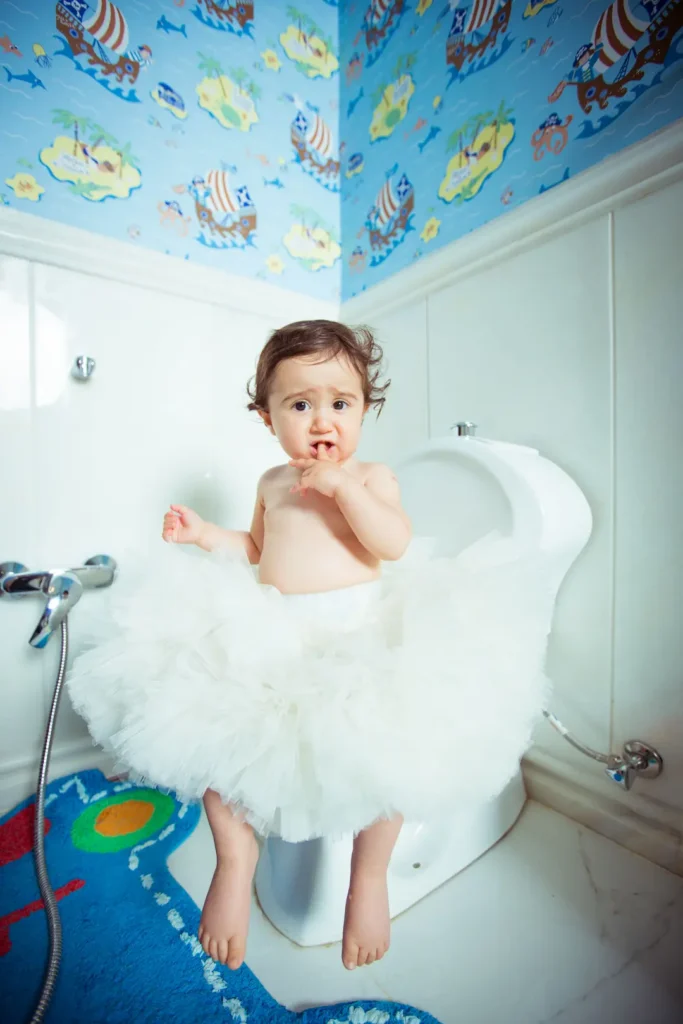
There are two basic types of potty seats. A stand-alone potty chair has a bowl you empty, and a toilet seat adapter helps toddlers fit onto the big toilet. Some families keep a small potty in more than one room so there is always one nearby. A sturdy step stool helps your child reach the toilet seat and the sink.
Teach the bathroom basics months before you begin potty training: words for pee and poop, how to flush, how to use toilet paper and how washing hands works. Let your child sit on the potty chair fully clothed and look at a book. Read a few picture books about using the potty, and let your child pick out new underwear to build excitement.
How to Start Potty Training at Home
Once you see readiness, three habits do most of the work.
The Golden Rule: A Home-to-Daycare Partnership
Potty training success depends on home and daycare working from the same playbook.
Tell the teacher your start date
Share the exact weekend you plan to begin, so school can start the same approach on Monday.
Sync your vocabulary
Do you say potty, pee, poop or something else? Give teachers your exact words so your child isn't juggling two vocabularies.
Mirror the daycare schedule
Ask for the classroom bathroom schedule, such as before snack, before outside time and after nap, and repeat those breaks at home on weekends. At Primary Beginnings, ProCare Connect gives parents daily updates about their child's day, which makes it easier to adjust at home.
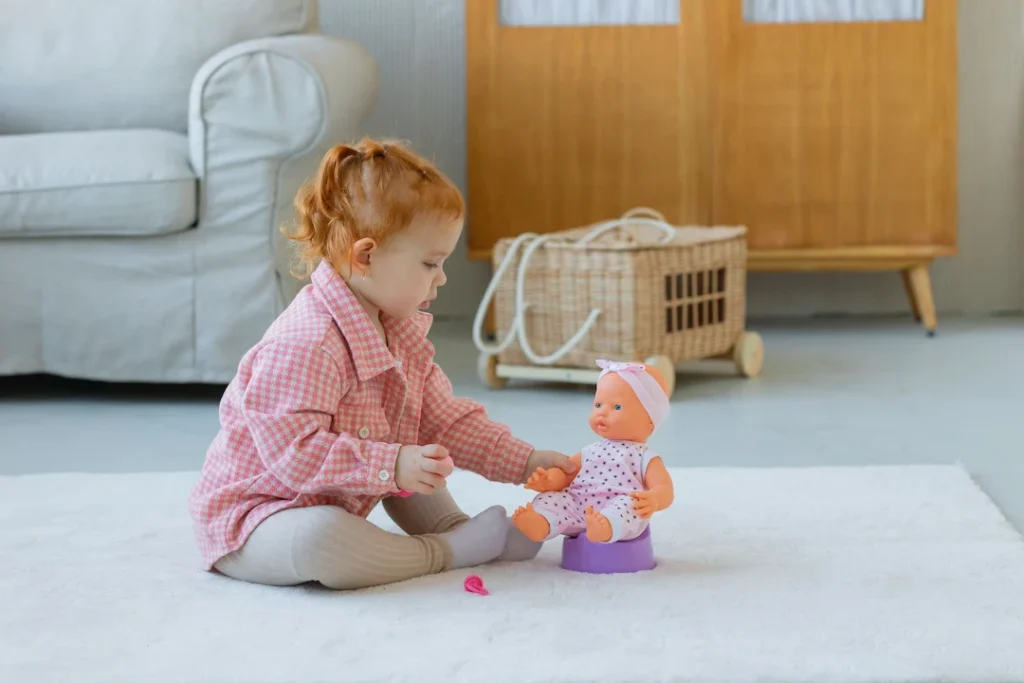
Dress Your Child for Success on School Days
A few small choices make daycare days much easier.
- Choose elastic-waist pants or leggings that a toddler can push down quickly. Skip overalls, belts, tricky buttons and onesies.
- Pack at least three full changes of clothes, plus extra socks and a backup pair of shoes.
- Think twice about Pull-Ups. Many professionals suggest skipping them for daytime potty training, since they can feel a lot like a diaper. Ask your center how it handles Pull-Ups, disposable training pants and regular underwear.
Handling Accidents and Regressions at School
Accidents will happen. A child who is reliable at home may get absorbed in play with friends and forget to go. Teachers handle accidents with a calm voice and treat them as a simple wardrobe change, with no shame and no punishment.
Regressions are common too. Illness, a new sibling and moving up to a new classroom can all cause a temporary setback. Return to your routine, keep your tone upbeat and give it a few weeks.
The Primary Beginnings Approach to Potty Training
Children entering our preschool program need to be fully potty trained. That is why our toddler classroom teachers help families through the transition phase, working with your schedule, your vocabulary and your child's pace.
Our classrooms also use child-sized toilets and sinks, which make independence less scary for little ones. Teachers stay calm, keep encouragement positive and share what they see, so you always know where your child is in the process.
Frequently Asked Questions
Do preschools require kids to be potty trained?
Many do, and policies vary by school. At Primary Beginnings, children entering our preschool program need to be fully potty trained, and our toddler teachers help families prepare. Ask any center about its policy and how it handles accidents before you enroll.
What is the 10-10-10 rule for potty training?
There isn’t a widely recognized 10-10-10 rule for toddlers. Some parents use the term for a routine of potty sits after waking, after meals and before bedtime. The routine is the useful part. Keep each sit to a few minutes.
My 3-year-old isn't potty trained for preschool. What should I do?
Check for readiness signs, then ask the school about its policy and timeline. Pick a start date, build a daily routine, dress your child in easy pants and share your approach with teachers. Many children show progress within a few weeks, though full training can take a few months. If your child resists or seems uncomfortable, talk to your pediatrician.
Should a 4 year old be completely potty trained?
Most 4-year-olds have daytime control, though an occasional accident is normal. Staying dry overnight often takes longer, and most children manage it between ages 5 and 7. If daytime accidents continue, check in with your pediatrician. Kindergarten is next, so our guide to transitioning your preschooler to kindergarten is a good follow-up read.
What is the fastest way to potty train?
There is no real shortcut, but the fastest route starts at the right time. Wait for readiness signs, choose a focused start such as a long weekend, offer potty sits on a regular schedule and stay consistent. Even with a focused start, most children need weeks or months to be reliable.
Is it normal for a 2 year old not to be potty trained?
Yes. Most children are ready between 18 and 24 months, but many show readiness later, and daytime control often arrives between ages 2 and 5.
What if my child is potty trained at home but has accidents at daycare?
This is very common. Home is quiet and familiar, while daycare is full of toys, friends and activities, so children get absorbed and wait too long. Teachers help with scheduled group potty breaks. Share your vocabulary and keep weekend routines close to the school schedule.
Can daycare teachers potty train my child for me?
Teachers are great cheerleaders and will follow your potty schedule during the day, but the foundation works best when it starts at home. Think of it as a partnership, with parents leading the first introduction.
How do you handle potty training during nap time?
Nap time is usually the last hurdle. Many centers use a Pull-Up or training pants at nap until a child wakes dry for a couple of weeks, which keeps the room sanitary and the child comfortable. Ask your center about its approach.
Tour Our Supportive Child Care Center in Raleigh
Potty training takes patience, deep breaths and a lot of extra laundry, but you and your child will get there.
Looking for a supportive child care environment that partners with parents through every developmental milestone? Schedule a tour at one of our Raleigh locations. Call call Spring Forest Road at 919-790-6888, Falls of Neuse Road at 919-615-0752 or North Hills Drive at 919-785-0303, or fill out the form below to get started.