
Pre-K, transitional kindergarten, and kindergarten are meant for different stages of early learning. Pre-K gives…
Choosing a preschool is a big decision. You’re choosing where your child will spend a large chunk of their time for the next few years. Most parents want the answer to a few simple questions: what is my child actually going to do all day, and will they be well cared for while getting a quality education?
To help answer those questions, this guide compares Montessori and traditional preschools by walking through a typical day at each one. We'll look at how the kids learn, play, and make friends. Both traditional and Montessori education are excellent, highly respected approaches. This guide is simply here to break down the unique styles of both so you can decide what works best for your family.
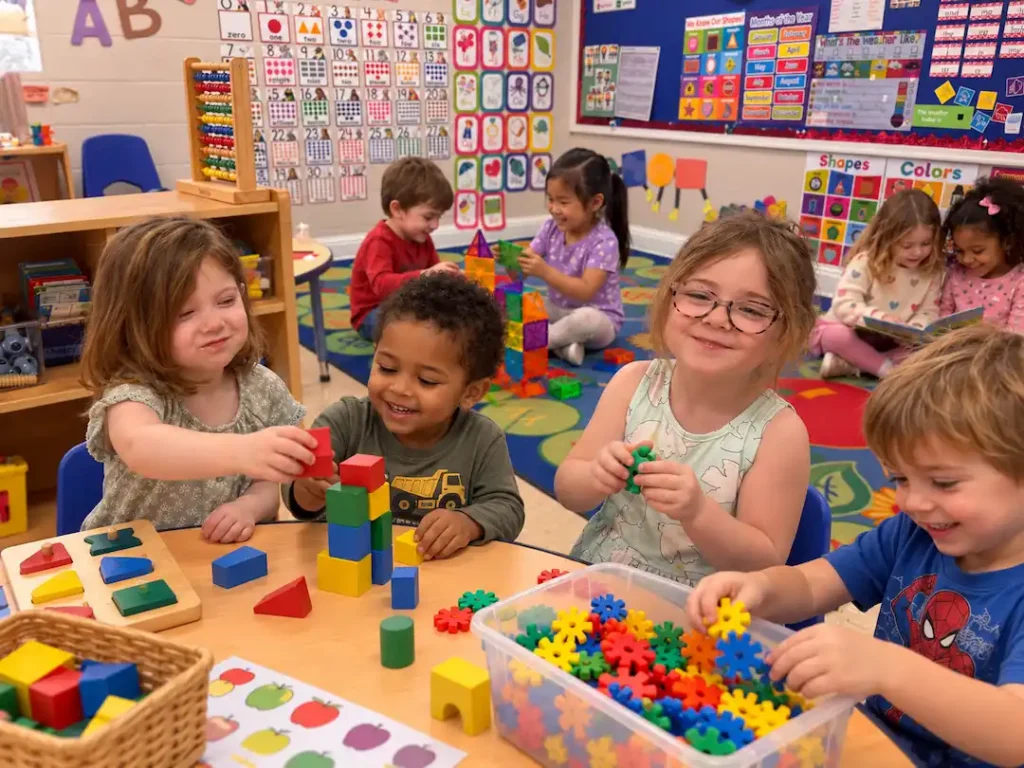
Table of Contents
A Quick Breakdown
A Montessori preschool lets children choose child-led, hands-on work in a calm, mixed-age classroom, with the teacher acting as a guide. A traditional preschool follows a teacher-led daily schedule in same-age classrooms, with circle time, group activities and guided play. Neither is better for every child. The right fit depends on how your child focuses, plays and handles structure.
Montessori vs Traditional Preschool at a Glance
| Feature | Montessori Preschool | Traditional Preschool |
|---|---|---|
| Who Leads | Child chooses work, teacher guides | Teacher plans and leads activities |
| Age Groups | Mixed ages, usually 3 to 6 | Same-age classrooms |
| Pace | Each child works at their own pace | Class moves through activities together |
| Materials | Specialized, often self-correcting Montessori materials | Varied toys, books, art supplies and themed activities |
| Classroom Environment | Calm, orderly, minimal distractions | Lively, colorful, social |
| Play | Mostly independent work | Pretend and group play are central |
| Progress Tracking | Teacher observation, usually no grades | Shared benchmarks and developmental checklists |
What Is a Montessori Preschool?
Montessori education comes from Maria Montessori, an Italian physician who developed the Montessori method in the early 1900s. Her core idea is that young children learn best by choosing purposeful, hands-on work.
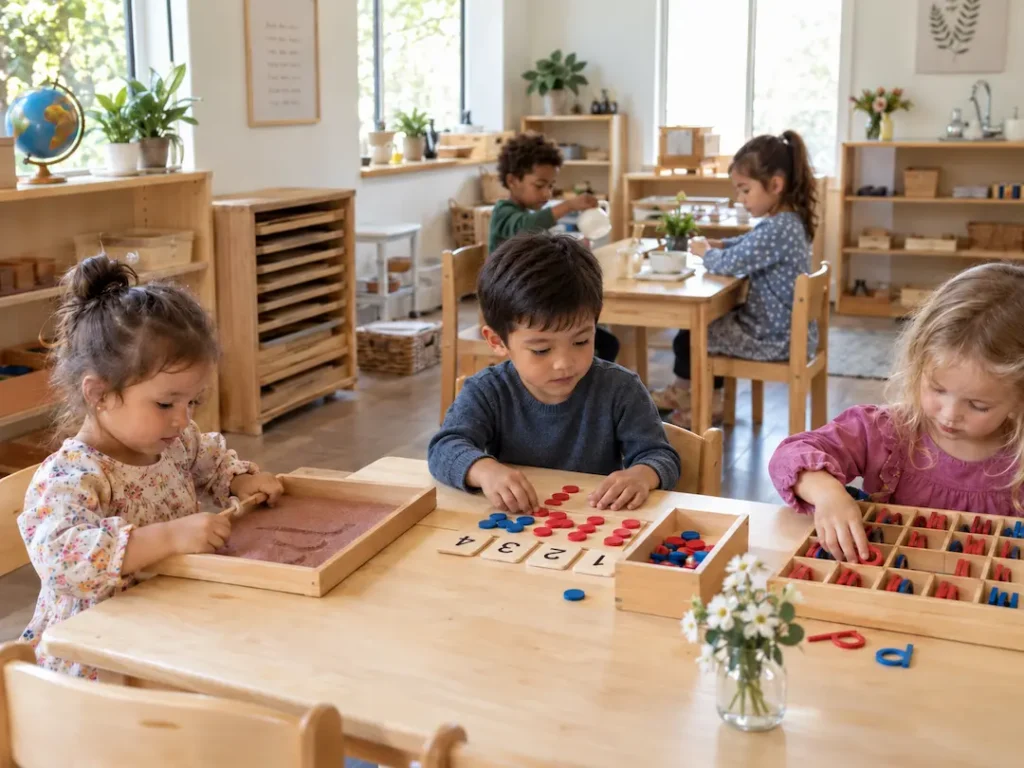
Montessori classrooms typically have:
- Mixed ages, usually 3 to 6 in one room
- A prepared environment with child-size furniture and materials on open shelves
- Montessori materials for hands-on math, language and sensory learning
- Practical life skills built into the day, such as pouring, sweeping and preparing snacks
- Individualized learning, with children working on different materials at the same time
- Long, uninterrupted work periods, often two to three hours
Montessori teachers observe, give short lessons and step back, acting as guides rather than directors. The word Montessori isn't trademarked, so programs vary in how closely they follow the method.
What Is a Traditional Preschool?
A traditional preschool groups children by age and follows a predictable daily schedule. It takes a teacher-directed approach: teachers plan themes, lead circle time and stories, and guide play toward goals like letter recognition, counting and sharing.
Many use a structured curriculum. At Primary Beginnings, we use The Creative Curriculum®, a play-based framework used throughout North Carolina, where learning happens through songs, stories, small group activities and hands-on play.
A Day in a Montessori Preschool
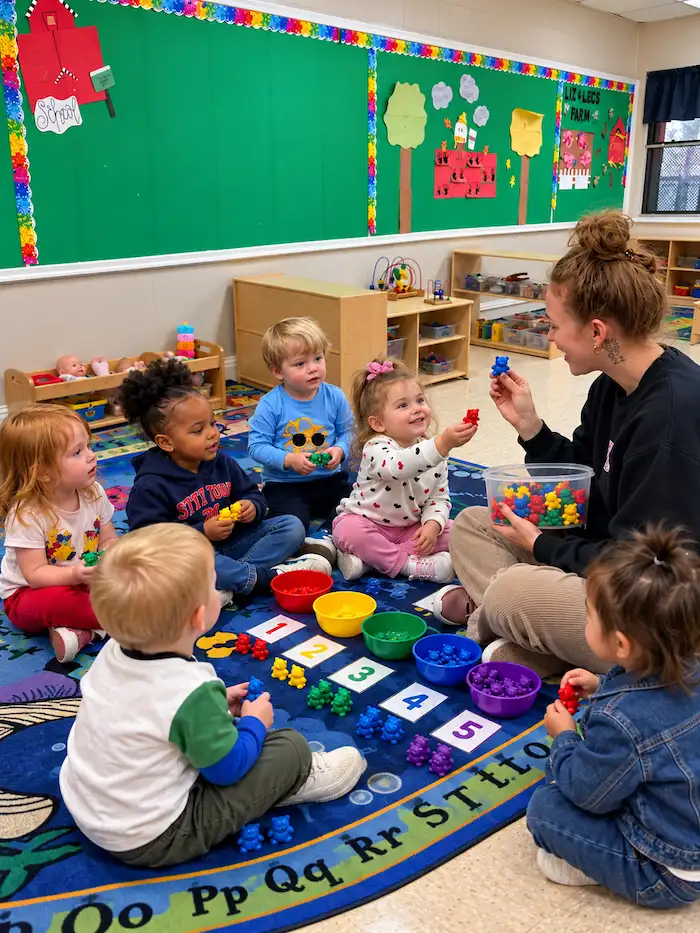
At 9:00 a.m., a Montessori child might pick a tray of counting beads off a shelf, carry it to a rug and work through it alone. The room is quiet.
A typical day looks something like this:
- 8:30 Arrival. Children hang up coats, greet the teacher and head to the shelves.
- 8:45 to 11:30 Work cycle. Each child chooses their own work, such as pouring water between pitchers, tracing sandpaper letters, counting golden beads or polishing a small mirror. The teacher gives short one-on-one lessons, and an older child may show a younger one how a material works.
- 11:30 Outdoor time. Gardening, caring for plants and running.
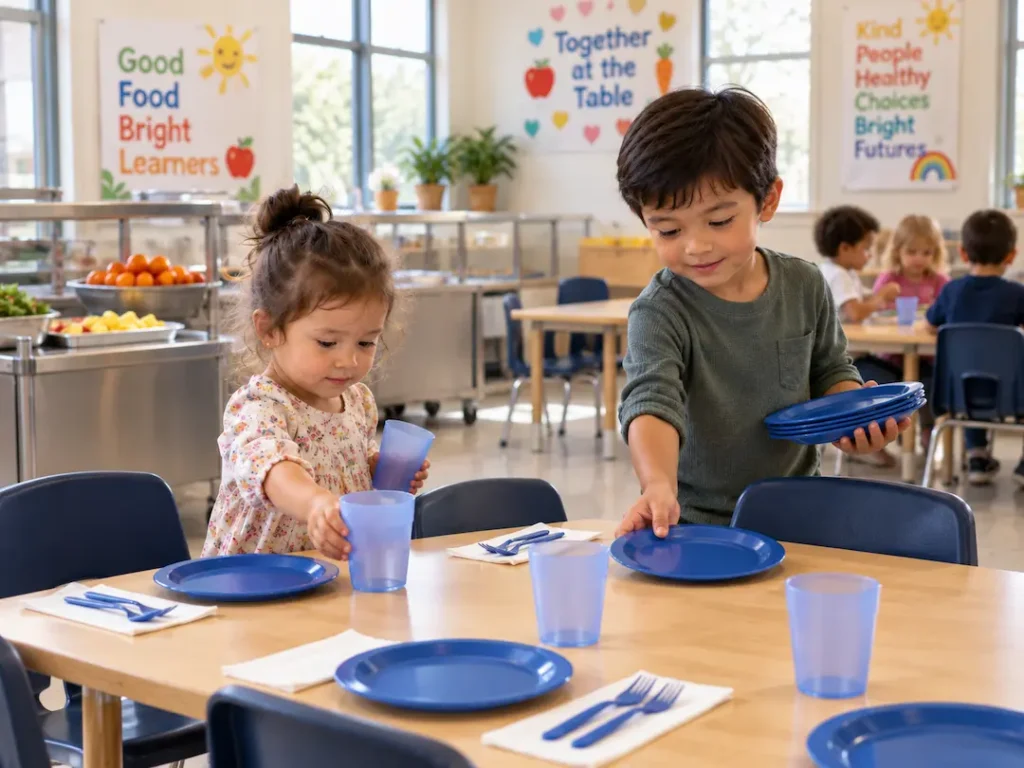
- 12:00 Lunch. Children set the table, serve themselves and clear their plates.
- Afternoon. Rest, music or stories, while older children continue independent work.
A Day in a Traditional Preschool
At 9:00 a.m., a traditional classroom is usually gathered for circle time. The teacher leads a song about the days of the week, reads a book aloud, and then children split into chatty small groups for a related craft. The room is lively.
A typical day looks something like this:
- 7:00 to 9:00 Arrival and free play. Children settle in at centers with blocks, puzzles, books and a play kitchen.
- 9:00 Circle time. Songs, calendar, weather and a read-aloud.
- 9:30 Small groups. Letter-sound games, counting with cubes or a themed craft, like painting planets during an outer space week.
- 10:30 Outdoor play. Running, climbing and gross motor games.
- 11:30 Lunch with classmates, then rest time.
- Afternoon. Story time, music, art, a simple science experiment such as growing beans, and dramatic play.
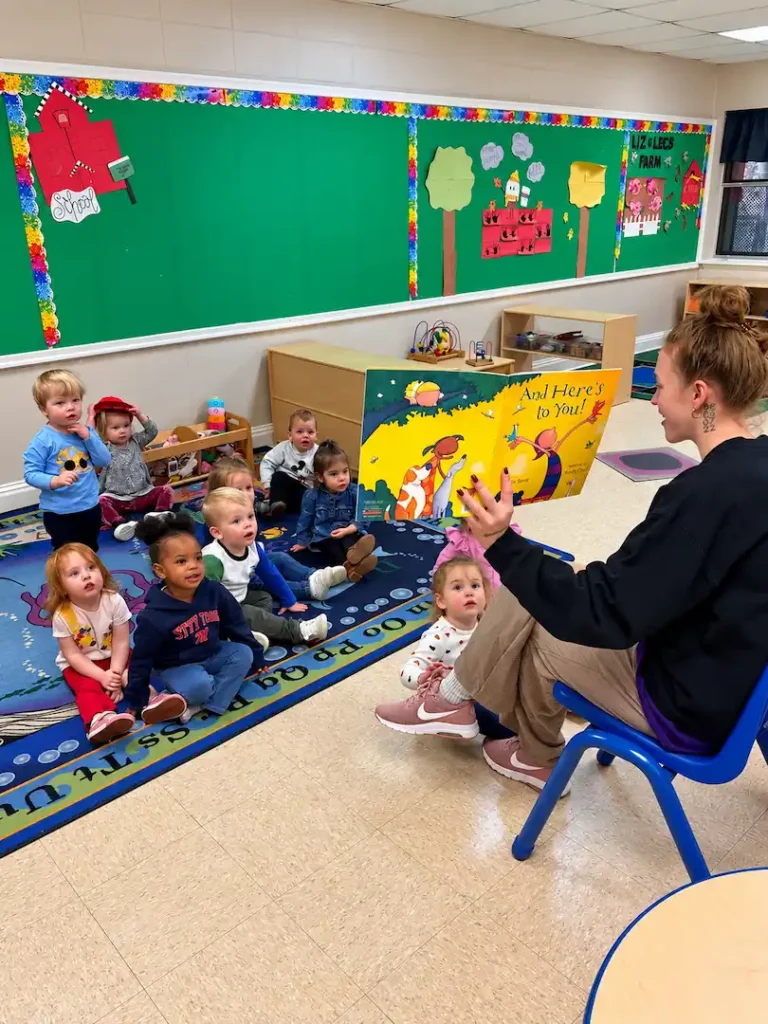
Schedules vary by school, but the pattern holds. Montessori centers on individual choice, and a traditional preschool centers on shared experiences.
How Children Learn Letters, Numbers and Life Skills
How Kids Interact: Social Skills in Each Setting
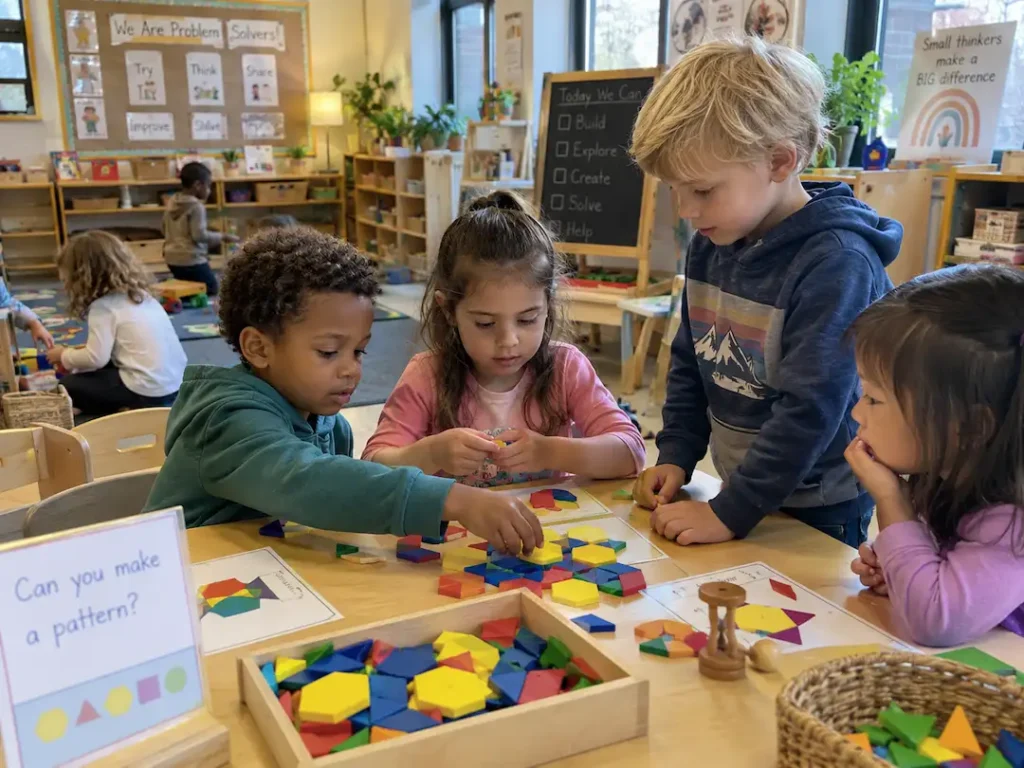
Montessori children tend to work side by side rather than together. Older children often mentor younger ones, and Montessori teachers coach everyone to respect each other's workspace and concentration. Pretend play gets less emphasis in classic Montessori classrooms.
A traditional preschool is built around collaboration. Children learn to share, take turns, play pretend together and work through conflicts with a teacher nearby. Those daily group experiences build empathy and the social skills kindergarten expects.
Kindergarten Readiness: What Elementary School Expects
Most kindergarten classrooms run on group routines. Children line up, take turns, raise their hands and follow a teacher-led schedule. A traditional preschool practices those habits daily, and our program is built around kindergarten readiness and NC Pre-K standards.
Montessori students move on to elementary school successfully too. Many just need a short adjustment to group instruction and a fixed schedule.
What the Research Says About Montessori
Research on Montessori education is encouraging but not one-sided. A 2017 study used a lottery for public Montessori schools in Hartford, Connecticut, and found that Montessori children pulled ahead over time on academic achievement and social understanding, and scored higher on executive function at age 4. Creativity and social problem-solving did not differ significantly between the groups.
Two caveats apply. The study looked at public programs in one city, so the results don't automatically carry over to every school using the Montessori name. And teacher training, classroom quality and how closely a school follows its model often matter as much as the label.
Pros and Cons of Each Approach
Montessori preschool
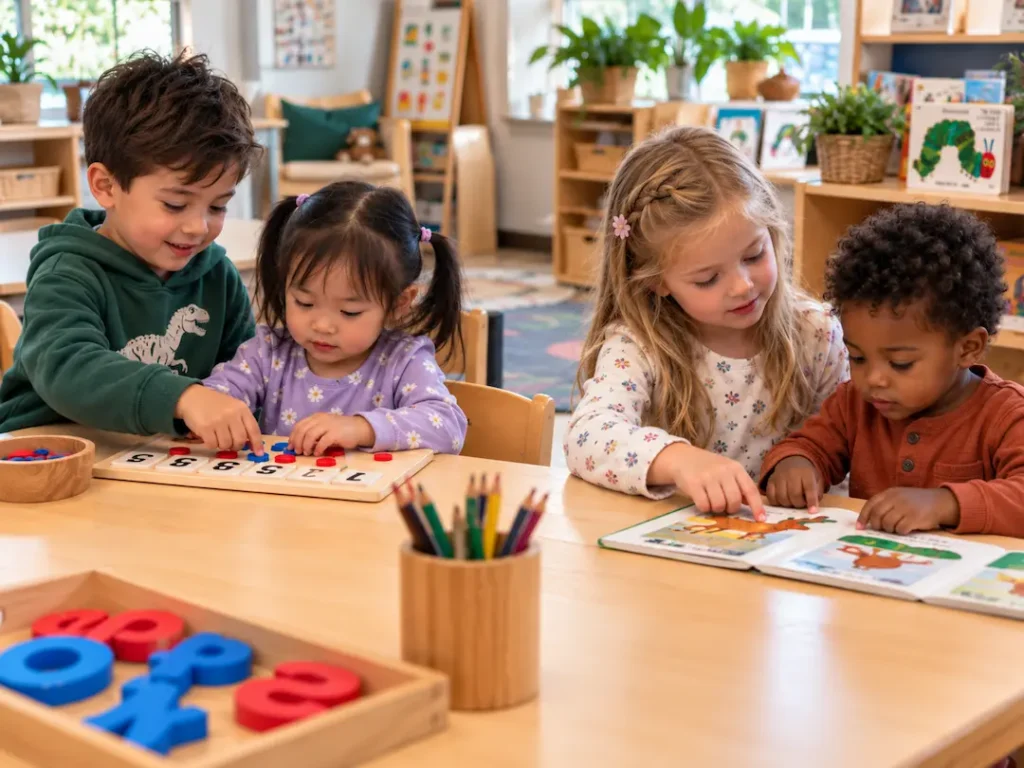
Strengths: Montessori classrooms foster independence and focus, let children work at their own pace and encourage peer learning across ages.
Drawbacks parents raise:
- Quality varies, since the name isn't trademarked
- Children who need more structure may struggle with a self-directed day
- Less group and pretend play in classic models
- Tuition at private Montessori schools can run higher
Often a good fit for children who concentrate well, like to work independently and feel comfortable in quiet spaces.
Traditional preschool
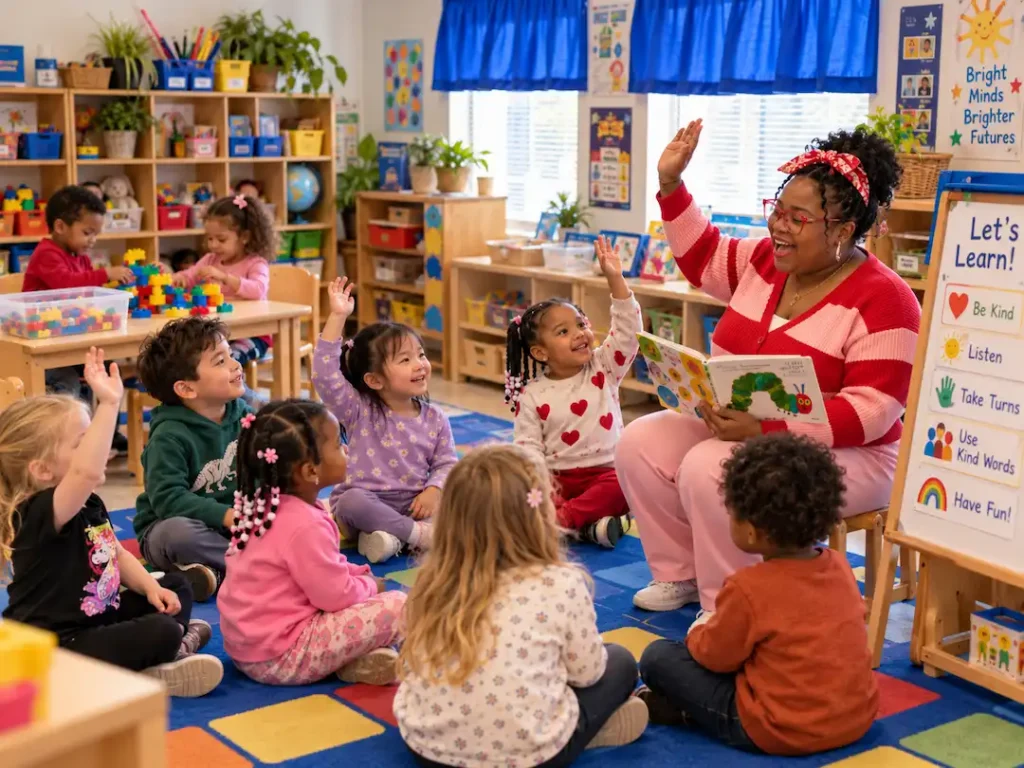
Strengths: a predictable routine, daily group play and teacher-led instruction that mirrors elementary school.
Drawbacks:
- The class moves at a similar pace, so some children may feel rushed or under-challenged
- Fewer chances to choose activities
- Busier rooms can overstimulate some children
Often a good fit for children who love group play, thrive on routine and enjoy active, varied days.
Questions to Ask on a Preschool Tour
Asking the right questions helps you make an informed decision.
For any school:
- What does a typical day look like?
- How much time do children spend outdoors?
- How do teachers handle conflicts between children?
- How will I hear about my child's day?
For Montessori schools:
- Are teachers AMI or AMS trained?
- How long are the work periods?
For a traditional preschool:
- What curriculum do you use?
- How do you balance structured learning with free play?
- What is your state quality rating?
The Primary Beginnings Approach
Primary Beginnings is a 5-star rated traditional preschool that balances structure with play. Children are grouped by age, so activities match each stage of development. Teacher-to-child ratios are 1:10 in our threes classrooms and 1:13 in our fours classrooms.
Our preschool program brings play-based learning and early childhood education together through daily story time and phonics, hands-on math and science, art and music, outdoor play and weekly Spanish for Pre-K students. We focus on the whole child, combining kindergarten readiness with social-emotional growth, physical play and creative expression.
Frequently Asked Questions
Is Montessori better than regular preschool?
Not necessarily. Studies show Montessori can support academic and social outcomes, but a high-quality traditional preschool also prepares children well. The better choice depends on your child’s temperament, your family’s goals and the quality of the individual program.
What are the biggest criticisms and disadvantages of the Montessori method?
The most common concerns are inconsistent quality, since the name isn’t trademarked, and less emphasis on pretend and group play. Some children also need more structure than a self-directed day offers, and private tuition can be higher.
Do Montessori kids do well in college?
Research that follows Montessori students into adulthood is limited, so no one can say for certain. Early studies show promising academic and social results, but family background and school quality also shape long-term outcomes.
Can a child move from Montessori to a traditional kindergarten?
Yes, and most children adjust well. The biggest shifts are group instruction, a fixed schedule and less choice over activities. Practicing routines like circle time and taking turns helps. Our blog covers how to transition your preschooler to kindergarten.
Which is better for a high-energy or active child?
It depends on the child. Montessori classrooms allow movement and choice but are calm and quiet. A traditional preschool schedules active play, songs and group games throughout the day, which many energetic children enjoy. Tour both and watch how your child responds.
Are Montessori preschools more expensive than traditional preschools?
Costs vary widely by school. Private Montessori programs often charge more because of specialized materials and teacher training, but some are comparable to traditional tuition. Compare what’s included, such as hours, meals and extended care, not just the monthly rate.
Is any school allowed to call itself Montessori?
Yes. The name isn’t trademarked. Ask whether teachers are trained through the Association Montessori Internationale (AMI) or the American Montessori Society (AMS), and whether the school uses authentic Montessori materials and mixed-age groups.
Does traditional preschool teach enough early reading and math?
A strong one does. Classrooms teach early literacy and math through phonics games, read-alouds, counting activities and small group lessons. By the end of our Pre-K year, many children recognize letters and beginning sounds, write their names and count to 20 or beyond.
Is Primary Beginnings a Montessori school?
No. Primary Beginnings is a 5-star rated traditional preschool with play-based, teacher-guided learning, age-specific classrooms and a focus on kindergarten readiness.
Montessori vs Traditional Preschool: Choosing the Right Fit
If your child thrives in quiet, independent spaces, a Montessori classroom may feel like home. If your child loves lively, collaborative days with a clear routine, a traditional preschool is likely the better match.
Primary Beginnings is a traditional, play-based preschool with three 5-star rated centers in Raleigh. Our NC Pre-K classrooms use The Creative Curriculum®, and we keep parents in the loop every day with photos, updates, and lesson plans through ProCare Connect.
Want to see our play-based classrooms in action? Schedule a tour at one of our three Raleigh locations: call Spring Forest Road at 919-790-6888, Falls of Neuse Road at 919-615-0752 or North Hills Drive at 919-785-0303, or fill out the form below to get started.