
As much as you want your preschoolers to stay young, they will eventually be going…
Pre-K, transitional kindergarten, and kindergarten are meant for different stages of early learning. Pre-K gives younger children time to build social, language, motor, and early academic skills through play. Transitional kindergarten offers an extra year of preparation before kindergarten. Kindergarten is the more familiar, traditional entry point into elementary school, with more formal classroom routines and academic expectations.
For parents wondering which early education program is best for their children, those definitions only go so far. You may have a child who can count well past 20 but still struggles with transitions or a child doesn’t know every letter of the alphabet yet but walks into a classroom confidently, joins a group, and asks for help when needed.
Those differences between tk vs. pre-k are why we look at more than a birthday when talking about school readiness during those early foundational years.
Table of Contents
Understanding the Landscape of Early Childhood Programs

In this blog, we'll help you choose between TK vs. pre-k, but first, let's go over the basic landscape of early childhood learning so you know the basics.
Early childhood education gives children room to develop at their own pace as they move from preschool and pre k toward kindergarten and elementary school.
In Pre-K, play based learning helps children build social skills alongside early literacy and math concepts. As kindergarten gets closer, teachers look for signs of growing independence, by kids being able to follow directions, join group activities, manage transitions, and communicate needs.
What Is Pre-K? Building a Strong Foundation Through Play
Pre-K generally serves toddlers ages 3 to 4, although the exact age group varies by program. North Carolina's state-funded Pre-K program is specifically for eligible children who are 4 years old by August 31.
In strong pre k classrooms, academics are built naturally into play based learning. Children might practice:
- Problem solving and social interaction during dramatic play
- Listening and communication during circle time
- Using songs and stories to recognize letters, rhyming, and phonemic awareness
- Early math skills through counting, sorting, patterns, shapes, and blocks
- Creativity, fine motor skills, and independence through art and classroom centers
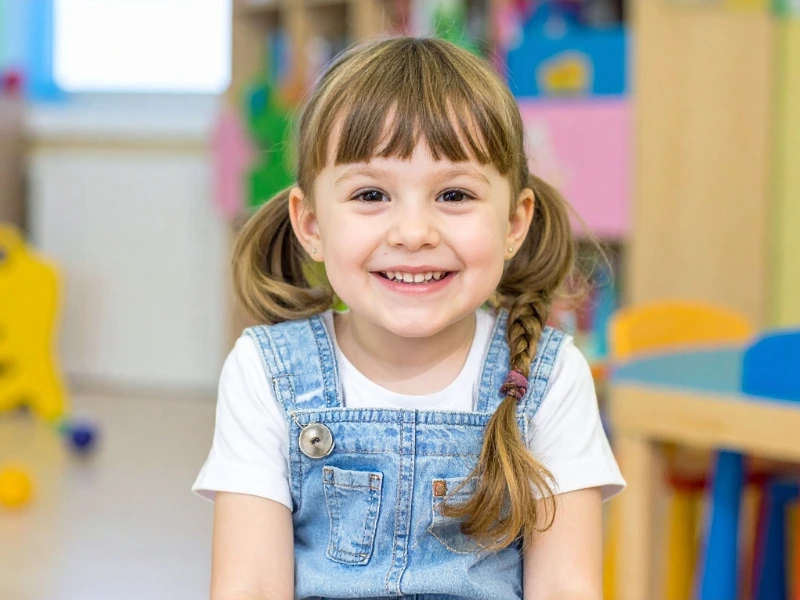
Primary Beginnings' Pre-K program uses The Creative Curriculum®, a hands-on, play based approach that supports the whole child while building skills for kindergarten.
What Is Transitional Kindergarten (TK)?
Transitional kindergarten programs sit between preschool and kindergarten, giving children additional time to develop skills before entering the academic setting of elementary school. Transitional kindergarten serves children around 4 years, 9 months to 5 years, 3 months, although enrollment ages vary by school.
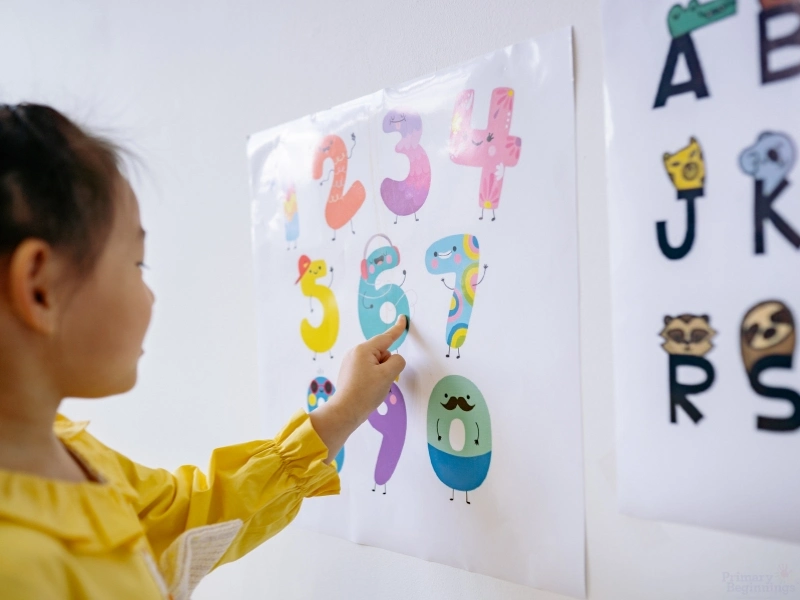
TK still includes movement, exploration, purposeful play, and social learning, but teachers often introduce more structure within their classrooms. This happens through:
- Early phonics and letter formation
- Number concepts
- Longer teacher-led activities
- Classroom routines and transitions
- Practice with independence, attention, and emotional resilience
The extra year isn't meant to push kindergarten academics earlier. It gives children who are close to kindergarten age more time to build confidence and strengthen skills that are still developing.
How Is Kindergarten Different?
In North Carolina public schools, children can enter kindergarten if they turn 5 on or before August 31 of that school year.
Kindergarten still includes stories, play, art, movement, and time with classmates, but there is a stronger emphasis on academic standards and independent classroom routines. Children work more directly on reading, writing, phonics, and math skills while also learning to manage belongings, follow multi-step routines, participate in group lessons, and complete more work independently.
This is why readiness goes beyond knowing letters or numbers. Educators also look at how a child handles frustration, asks for help, follows directions, and functions within a group.
Primary Beginnings' approach to kindergarten readiness in Raleigh considers cognitive skills alongside social, emotional, language, and independence development.
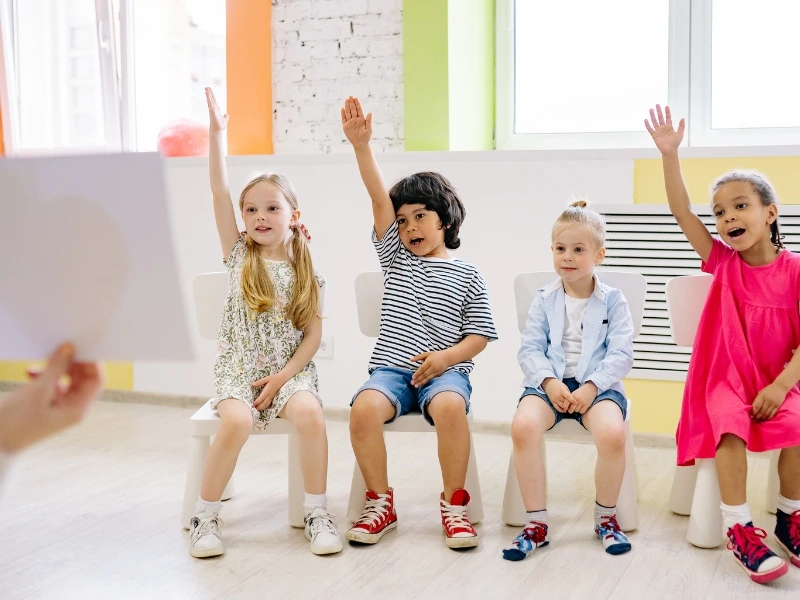
Key Curriculum Differences In Transitional Kindergarten TK vs. Pre-K
When parents compare tk vs. pre-k, the clearest difference is usually not one particular lesson. It's the way the classroom day is structured.
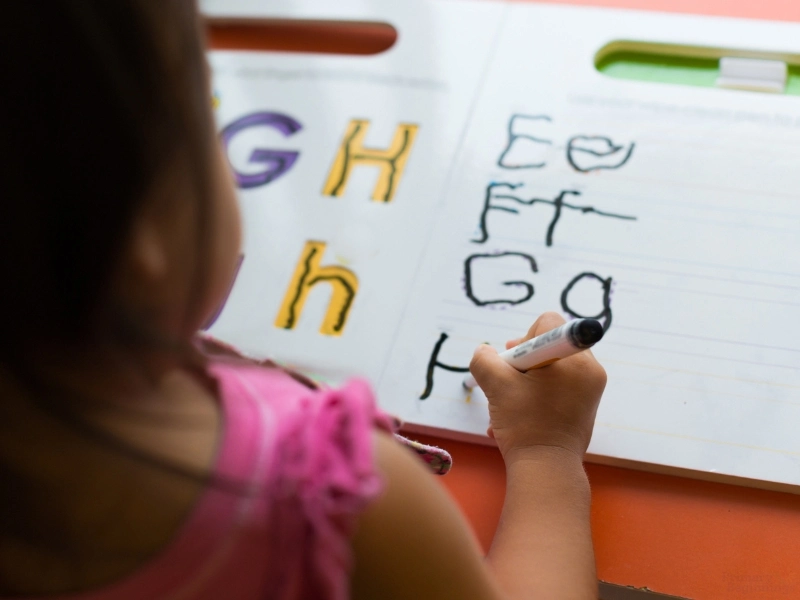
Pre-K leaves a great deal of room for children to learn through exploration. A teacher may introduce letters during a story, counting during cleanup, or new vocabulary while children are playing. In TK, those same skills may receive more direct attention because the child is closer to kindergarten. There may be a scheduled phonics activity, more practice writing letters, or a longer period when children are expected to participate together.
A simple way to think about the difference is:
- Pre-K: Teachers focus on building broad early learning skills through play, conversation, exploration, and social emotional learning.
- TK: Gives older preschoolers more focused practice with kindergarten routines, early literacy, math, attention, and independence.
- Kindergarten: Begins formal elementary education with grade-level academic expectations.
That doesn't mean every TK program is automatically more academic than every Pre-K program. Program names aren't standardized everywhere. Two schools may use different labels for classrooms that serve very similar children.
How to Determine School Readiness for Your Child
School readiness is about more than age or academic skills. Early educators also look at how comfortably a child handles the routines, expectations, and social situations that come with a typical school day.
When considering whether your child is ready for Pre-K, TK, or kindergarten, ask:
- Can they separate from you and settle into the classroom?
- Can they communicate basic needs to a teacher?
- Can they follow simple directions and move between activities?
- Can they participate in circle time or another group activity?
- Are they beginning to manage toileting, eating, dressing, and belongings independently?
- How do they respond when another child wants the same toy or activity?
- Will they keep trying when something feels difficult?
No child will do all of these things perfectly every day. Readiness is developmental. The goal is to choose a classroom where the expectations are appropriate for your child's current skills while still giving them room to grow.
Common Questions About TK and Pre-K
What does TK mean in preschool?
TK means transitional kindergarten. It describes a program that sits between preschool or Pre-K and kindergarten. The class is intended for children who are close to kindergarten age but could benefit from more time to develop foundational skills, confidence, independence, and emotional maturity.
Should a 3 year old be in Pre-K?
A 3-year-old can absolutely participate in a preschool or Pre-K program that is designed for that age. At 3, we would expect plenty of movement, play, stories, conversation, art, sensory activities, and adult support. Younger children are still learning how to be part of a group, so social and emotional development should remain a major focus.
NC pre kindergarten programs are different from the general term “Pre-K.” The state-funded program serves eligible children who are 4 by August 31.
Is transitional kindergarten public or private?
It depends on the state. Some areas offer tuition-free public TK, but North Carolina does not have a separate statewide TK program. Raleigh families may instead find private Transitional Kindergarten, Young 5s, or Bridge programs, while eligible 4-year-olds may qualify for NC Pre-K.
What are the advantages of transitional kindergarten?
Transitional kindergarten can give children an extra year to build confidence, independence, emotional resilience, and foundational academic skills before kindergarten. It may be especially helpful for children who are close to the age cutoff but would benefit from more time with classroom routines, purposeful play, early literacy, math, and social development.
What are the disadvantages of TK?
The main drawback is that TK adds another year before traditional kindergarten. For families using a private program, that can mean another year of tuition and child-care costs.
It also changes the child’s school timeline. They may be older than some classmates when they eventually enter kindergarten and later grades.
If a child is already comfortable with group routines, developmentally ready for kindergarten, and eligible to attend, another year in TK may not offer enough benefit to justify delaying school.
Schedule a Visit to a 5-Star Raleigh Preschool Today
Seeing the classroom in person can make it easier to decide which early education setting feels right for your child. Tour Primary Beginnings, meet our teachers, and learn more about our 5-star Raleigh preschool programs and how we help children approach kindergarten readiness.
We have three Raleigh locations. You can reach us at 919-785-0303 for North Hills Drive near Midtown and Downtown Raleigh, at 919-790-6888 for Spring Forest Road in North Raleigh, and at 919-615-0752 for Falls of Neuse Road in North Raleigh, or fill out our contact form below to get started.